Show summary Hide summary
Summary:
- Chinchero International Airport aims to expand air access near Cusco, with timelines often discussed around late 2027 to early 2028.
- Machu Picchu has controlled entry (time slots and visitor limits), so higher demand may squeeze trains, towns, and prices rather than the site itself expanding.
- Heritage worries extend beyond the citadel: the Sacred Valley includes living communities and archaeological zones.
- Environmental pressure is often about basics: water, waste, and road capacity.
- The best trips will still be the ones that slow down: more nights, earlier bookings, and smarter routing.
Getting to Machu Picchu is not a simple hop. The route through Cusco, the valley, the train line, and Aguas Calientes builds anticipation and forces a slower pace, which is part of why the place still feels earned, not consumed.
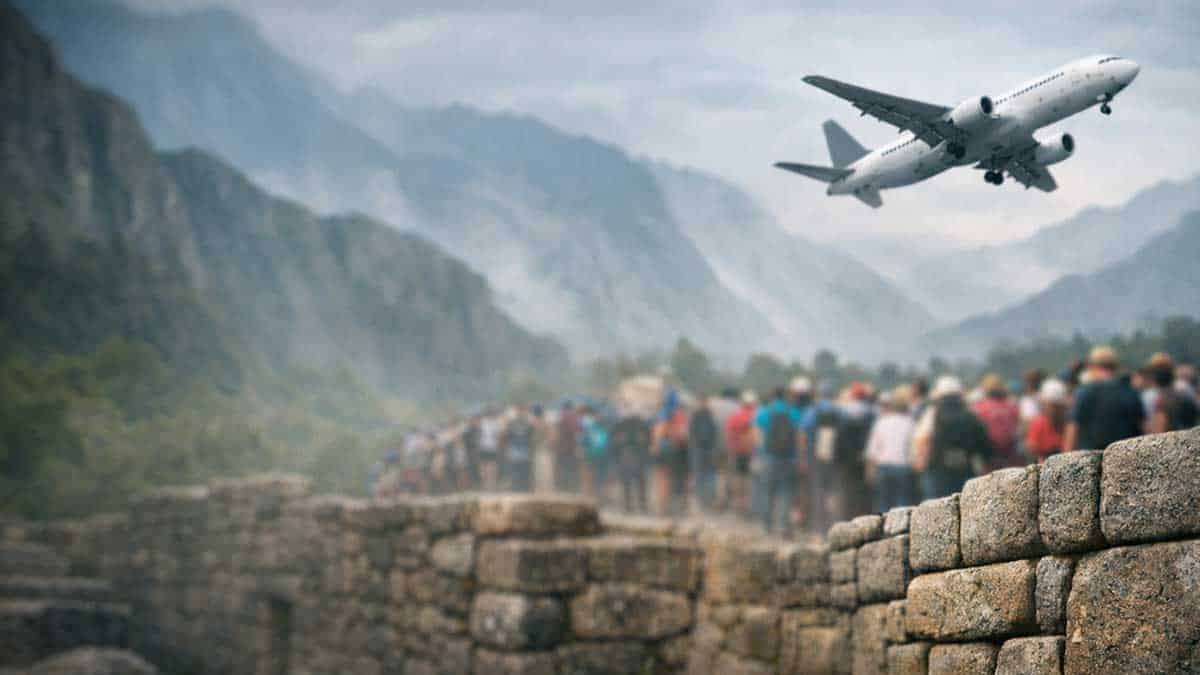
Chinchero Airport could change that rhythm. If flying in becomes easier and volumes rise, the pinch will show up first in the valley: transport, lodging, water, and the everyday life of towns that already absorb a lot of tourism.
Dropping off at Heathrow or London Gatwick: how to avoid the fees
Fern storm: why your flight gets canceled even with clear skies in Europe
The long route is part of the experience
Today’s journey shapes how you arrive. When travel takes time, you naturally spend a night in Cusco, stop in the Sacred Valley, and spread money across guides, markets, small hotels, and family restaurants. That slower pattern creates breathing room for places that are not built for sudden surges.
Remove friction and travel behavior changes. More people try to “do” Machu Picchu in one tight loop, and the region becomes a corridor instead of a trip. The risk is not only crowding, but also a thinner experience that feels rushed and transactional.
What Chinchero Airport really changes
Chinchero International Airport is designed to handle more air traffic than Cusco’s current airport and make access to the region smoother. In public reporting, the project is often described with ambitious capacity targets, and a completion window frequently mentioned around late 2027 to early 2028.
For travelers, the practical impact is simple: more flights, potentially more direct connections, and more people arriving at similar hours. That is convenient for planning, but it also concentrates pressure on roads and services that cannot scale overnight. The key point is that “more seats in the sky” does not automatically translate into more space on the ground.
Reality check: easier access vs fixed limits
Machu Picchu does not grow with demand. Entry is managed with time slots and defined visitor circuits, and daily limits are part of how authorities protect the site. When demand rises, the squeeze often hits everything around it: train availability, hotel prices, and the vibe in Aguas Calientes and Sacred Valley towns.
| Topic | Today | If arrivals surge |
| Travel pace | Multi-step journey | Faster arrivals, tighter itineraries |
| Machu Picchu entry | Timed slots, controlled circuits | Same controls, tougher competition |
| Valley towns | Peaks and quiet gaps | Longer peak weeks, more crowding |
| Costs | Manageable with planning | Prices more tense in high demand periods |
The Sacred Valley is not a blank canvas
Most debates focus on Machu Picchu, but the Sacred Valley holds much more than one famous viewpoint. It is a region of living towns, farming terraces, roads, and archaeological areas close to modern life. Large infrastructure projects and rapid tourism growth can reshape that fabric quickly, and those changes are often one-way.
There is also the atmosphere factor. More aircraft activity, more traffic, and more construction can change the feel of mornings in the valley. For many travelers, that quiet sense of scale is part of why Peru feels different. If the valley becomes noisier and more saturated, you may still “see” Machu Picchu, but experience less of the place around it.
Water, waste, and roads: the hidden constraints
Tourism pressure is not only about numbers at the gate. It is also about infrastructure. Water supply around Cusco is regularly discussed as a sensitive topic, and more tourism increases consumption through hotels, showers, laundry, restaurants, and construction. It is a practical limit that can appear long before anyone changes an official visitor cap, especially during drier periods when demand is high.
Waste management is another stress point. Small towns can struggle when arrivals spike, and treatment systems are not as visible as a photo viewpoint. Roads are similar: if many travelers land at once, everyone needs a transfer at the same time, and valley roads do not expand quickly. These are the everyday constraints that decide whether travel feels smooth or chaotic.
Simple choices that make a real difference
- Travel outside the most compressed weeks if you can. This keeps your trip calmer and cheaper.
- Stay at least one night in the Sacred Valley. It reduces transfers and spreads spending.
- Carry a reusable bottle and cut single-use plastic where possible.
- Avoid the ultra-tight “one day miracle” itinerary. Give altitude and logistics some margin.
How to keep your trip “big,” even if it gets easier
If access improves, the temptation is to compress the trip. That usually backfires. You arrive tired, you rush the valley, and you experience Machu Picchu like a checkpoint. The strongest memories often come from unplanned moments: a market stall, a slow lunch, a morning walk, a conversation. Those need time.
A human-paced plan is often the best plan for the region too. More nights and fewer transfers reduce pressure peaks, and they keep your experience richer.
A simple three-day rhythm
- Day 1: arrive, rest, short walk, early dinner. Keep it light and easy.
- Day 2: one Sacred Valley site, a market, a slower meal, early night.
- Day 3: Machu Picchu early slot, then return without racing the clock. Protect the morning calm.
Flight delayed or cancelled? the simple plan to save your trip (and your budget)
Budget airlines aren’t as cheap as they used to be, and you can feel it
Chinchero Airport could make the Sacred Valley easier to reach, and that will appeal to many travelers. But easier access does not guarantee a better trip, especially in a region where space, water, roads, and heritage sites have real limits.
If you want Machu Picchu to feel like more than a photo stop, build in time. Book early, stay longer, and move slower. That is how the place stays powerful, even as the world tries to arrive faster.