Show summary Hide summary
Summary:
- Angola’s basics are simple: Portuguese is the official language and the kwanza (AOA) is the currency.
- Your biggest constraint is time on the road, not “things to do”.
- For a first trip, three anchors work well: Luanda, Kalandula Falls (105 m high, 400 m wide), and Cabo Ledo (about 116 km from Luanda).
- Build in one flexible day. It’s the difference between a good plan and a trip you survive.
- Keep it human: fewer stops, more breathing room, more real moments.
Angola sits in that rare category of countries that still feel a bit undefined for independent travel. Not because it’s impossible, but because it doesn’t hand you a ready-made route. Distances are big, infrastructure is uneven, and you’ll get more out of the trip if you accept a simple truth: the road is part of the story.
This guide is written for a first-timer who wants something concrete. No dramatic warnings, no fantasy “hidden paradise” promises. Just an itinerary that makes sense, the practical basics you’ll actually use, and a clear idea of what’s worth the effort, especially if you have 7 to 10 days.
Bhutan: the country that quietly slows you down (and you’ll thank it for)
Europe in 2026: the trips worth planning around real dates
Start with the basics: language, money, rhythm
Angola gets easier the moment you stop improvising the fundamentals. Portuguese is the official language, and while you may find some English in parts of Luanda, it’s safer to assume you’ll rely on Portuguese, gestures, and a translation app once you’re outside the capital.
Money is the other quiet variable. The national currency is the Angolan kwanza (AOA), and having access to cash can matter for small daily transactions, especially away from major hotels.
The biggest planning win is rhythm. Angola is not the place for a day-by-day sprint. Roads and drive times can be slower than the map suggests, so you’ll enjoy the trip more if you plan fewer jumps and give yourself space to adapt. A calm pace beats a “perfect” schedule.
Field-ready checklist (short, practical)
- Offline maps plus a power bank
- Insect repellent plus a small first-aid kit
- Some cash split across pockets or bags
- A note with 10 useful Portuguese phrases, even phonetic ones
Three places that deliver on a first trip
If you try to see everything, you’ll spend the trip watching the clock. A cleaner approach is to pick a few anchors that feel different from each other. For a first visit, these three create a solid backbone: a city base, a major natural site, and a coastal reset.
Kalandula Falls: the “shut up and stare” moment
Kalandula Falls, in Malanje Province on the Lucala River, is one of Angola’s headline natural sights. The falls are commonly described as about 105 meters high and 400 meters wide, which gives you a sense of scale before you even arrive.
The best way to experience it is not a quick stop. If you’re making the drive, give the falls at least half a day, ideally more, so the effort pays off. Time on site is what turns a long journey into a real memory.
Cabo Ledo: the coastal breather near Luanda
Cabo Ledo is where you slow down. It’s known for beach time and surf culture, and it works beautifully after inland travel. The distance from Luanda to Cabo Ledo is roughly 116 km by road, which makes it one of the most realistic “reset” stops for a shorter trip.
Even if you don’t surf, the value here is simple: you recover, you eat and sleep better, and you stop thinking in travel-day calculations. A lighter rhythm helps the whole itinerary feel sustainable.
Luanda: the practical gateway with real contrasts
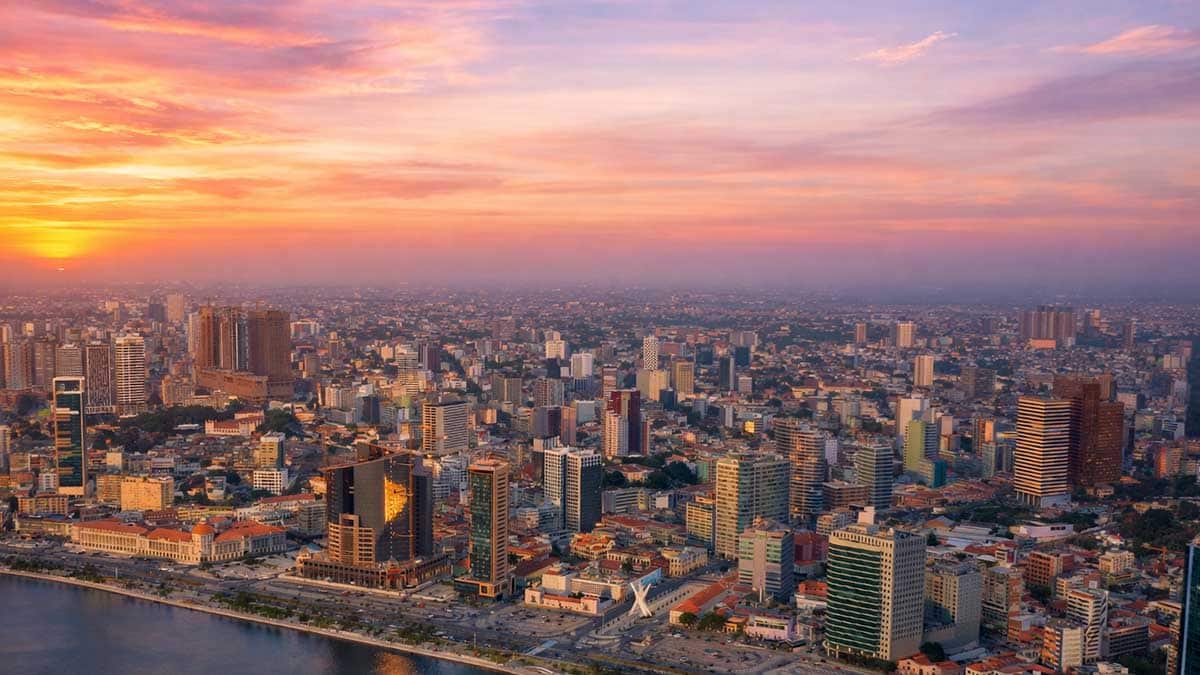
Luanda is the place to land, organize, and settle into the country’s pace. It’s also where you handle the basics that make everything else smoother, like connectivity, cash access, and onward transport planning. Think of it as a working base, not an attraction checklist. One to two days is usually enough to get your bearings.
Getting around without burning out
Here’s the honest part: Angola rewards travelers who build in slack. Distances may look manageable, but driving can take longer than expected. The trip gets harder when you stack big travel days back-to-back and still expect “full” sightseeing days.
A simple framework helps. If a day is mainly road, treat it like a road day. Don’t force a packed agenda on top of it. And if your trip is 7 to 10 days, protect one flexible day to absorb delays or just rest. A buffer day is not wasted time, it’s a stress filter.
| Stop | Why it’s worth it | Logistics effort | Best for |
| Luanda | Base, organization, first impressions | Low | Smooth start |
| Kalandula Falls | Major nature highlight | High | Big scenery |
| Cabo Ledo | Coast, recovery, slower days | Medium | Rest and balance |
Three rules that keep this human: plan fewer moves, leave room for surprises, and don’t pretend the map equals real time. Less hopping almost always feels better in Angola.
A realistic 7 to 10 day itinerary
This is a structure that works because it respects travel time. It won’t win awards for complexity, but it holds up in real life.
The core plan (7 to 8 days)
Days 1 to 2: Luanda
Set up your essentials and ease into the country. Keep it simple, sleep well, and get ready for inland travel. A calm startpays dividends later.
Days 3 to 4: Kalandula Falls (Malanje Province)
Travel inland and give the falls proper time. If you can, avoid the “arrive, shoot, leave” pattern. One unhurried visitbeats two rushed ones.
Days 5 to 6: Return toward the coast, gradually
Use this window to travel back without forcing heavy sightseeing. Treat it as a transition that keeps your energy intact. Energy management matters more than squeezing in one extra stop.
Days 7 to 8: Cabo Ledo
Let the trip breathe. Beach time, slow meals, early nights, whatever resets you. Coastal recovery is not a bonus, it’s part of the itinerary.
If you have 9 to 10 days
Reynisfjara right now: what changed on Iceland’s black sand beach
Europe’s 2026 travel shortlist: Madeira, Tbilisi, Milan, Glasgow
Use the extra time as a buffer day and a second easy day on the coast or in Luanda. You’ll come home with a better trip, not just a longer one. Space in the schedule is often where the best moments happen.
Safety and common sense, kept simple
No drama here, just habits that work in most big cities and road-trip countries. Keep valuables discreet when you don’t know the area, ask before photographing people, and keep evenings straightforward with clear transport plans. On the road, the bigger risk is often fatigue, so take breaks and don’t push driving when you’re tired. Low-key awareness beats anxiety.