Show summary Hide summary
Summary:
- Slow tourism focuses on staying longer in fewer places.
- Traveling slower often leads to deeper connections and lower costs.
- You can adopt slow travel even on short trips.
- Some destinations naturally encourage a more relaxed rhythm.
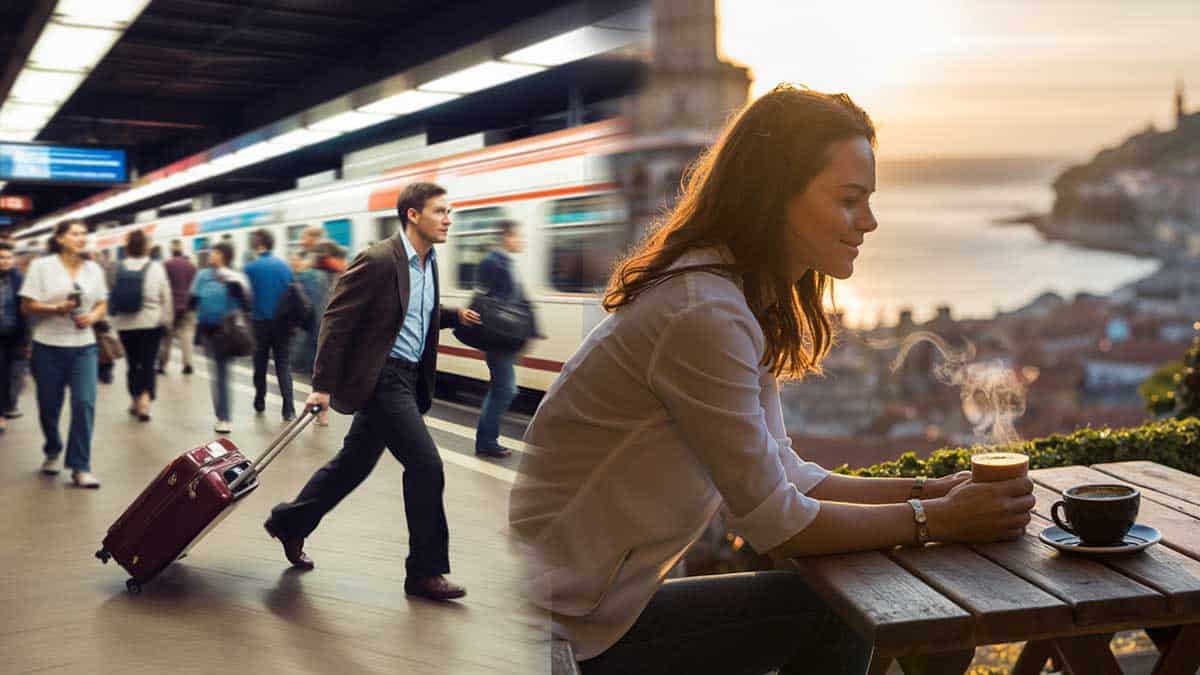
Most trips begin with excitement and end with fatigue. Days fill up quickly, schedules tighten, and attention scatters between transport times and must-see spots. You experience a lot, but often without the time needed to absorb it. The result is not disappointment, but a strange distance, as if the destination never fully settled in.
Slow tourism offers another way to travel. Not as a rigid philosophy, but as a quiet adjustment of pace. By moving less and staying present, travel becomes less about completion and more about familiarity. This article looks at what slow tourism means in practice, why more travelers are drawn to it, and how to apply it without turning travel into a constraint.
Bhutan: the country that quietly slows you down (and you’ll thank it for)
Europe in 2026: the trips worth planning around real dates
Slowing down is not a rule, it is a shift
Slow tourism is often misunderstood. It is not about rejecting comfort or following strict principles. At its core, it is a shift in attention. Fewer places, more presence. Less movement, more awareness.
Staying longer in one place changes perception. Days stop being units to fill. You start noticing patterns, routines, and small details. A bakery opening later than expected. A square that comes alive in the evening. The quiet of early afternoons. None of this appears on a checklist, yet it shapes memory far more than landmarks do.
Slow travel often emerges naturally. You walk more. You plan less. You stop measuring the day by what comes next. The destination becomes something to inhabit, even briefly, rather than something to complete.
Traveler’s note
Many travelers do not plan to practice slow tourism. They simply arrive there once urgency fades and time loosens its grip.
Why fast travel is losing its appeal
For years, speed was associated with freedom. More cities, more highlights, more experiences packed into a single trip. But accumulation has a cost. Tight schedules leave little room for curiosity. Constant movement fragments attention. Fatigue builds quietly, then suddenly.
Slowing down does not remove intensity. It changes its nature. Conversations last longer. Familiar faces appear. Streets stop feeling anonymous. Instead of chasing moments, you begin to notice them.
There are also practical effects that matter more than expected.
- Expenses drop when transport becomes occasional instead of constant.
- Logistics simplify when packing and unpacking stop ruling the day.
- Encounters deepen when you see the same people more than once.
- Travel feels lighter, both mentally and physically.
| Travel rhythm | Daily pressure | Budget | Relationship to place |
| Constant movement | High | High | Fleeting |
| Slower stays | Moderate | Controlled | Familiar |
For many travelers, this shift is not ideological. It becomes a practical decision, born from experience rather than theory.
You do not need more time to travel slower
Slow tourism does not require months on the road or major lifestyle changes. It often starts with one simple decision: moving less.
Choosing one place instead of several already transforms the experience. Time usually spent in transit becomes available. For walking, sitting, observing, resting. For doing nothing, without guilt.
A few habits help make this shift easier.
- Leave gaps in your day instead of filling every hour.
- Explore neighborhoods, not only landmarks.
- Walk whenever distances allow it.
- Accept moments of boredom. They rarely last.
What this means for you
Slower travel is not about doing less. It is about letting things unfold instead of pushing them. Even a short trip can feel different once urgency disappears.
The duration matters less than the posture.
- Short stays benefit from focus and restraint.
- Longer stays allow routines to form and curiosity to deepen.
Slow tourism adapts to constraints. It does not demand perfection.
Some places invite you to slow down
Not all destinations resist speed equally. Some places naturally impose their own rhythm. Walking feels obvious. Public life happens outside. Time is shared, not scheduled.
These places are often smaller towns, coastal areas, or regions where tourism has not erased daily routines.
Examples include:
- Portugal, where coastal towns favor walkability and long meals.
- Italy, especially in less-visited regions shaped by daily habits.
- Japan, in rural areas where trains, walking, and silence structure movement.
- Thailand, particularly in the north, where community life sets the pace.
Local tip
Staying just outside major tourist centers often offers a better balance: calmer streets, fairer prices, and more natural exchanges, without isolation.
Reynisfjara right now: what changed on Iceland’s black sand beach
Europe’s 2026 travel shortlist: Madeira, Tbilisi, Milan, Glasgow
These destinations share something simple. Time feels available. Not empty, just open.
Slow tourism does not ask travelers to change who they are. It simply asks them to stop rushing past what they came to see. By staying longer and moving less, places begin to make sense. Not all at once, but enough to leave a trace.Sometimes, travel only starts once you stop trying to keep up.