Show summary Hide summary
Summary:
• What the new access rules mean on the ground.
• Who will need to pay, and who won’t.
• Why Rome chose regulation instead of stricter limits.
• How to adapt your visit without losing the magic.
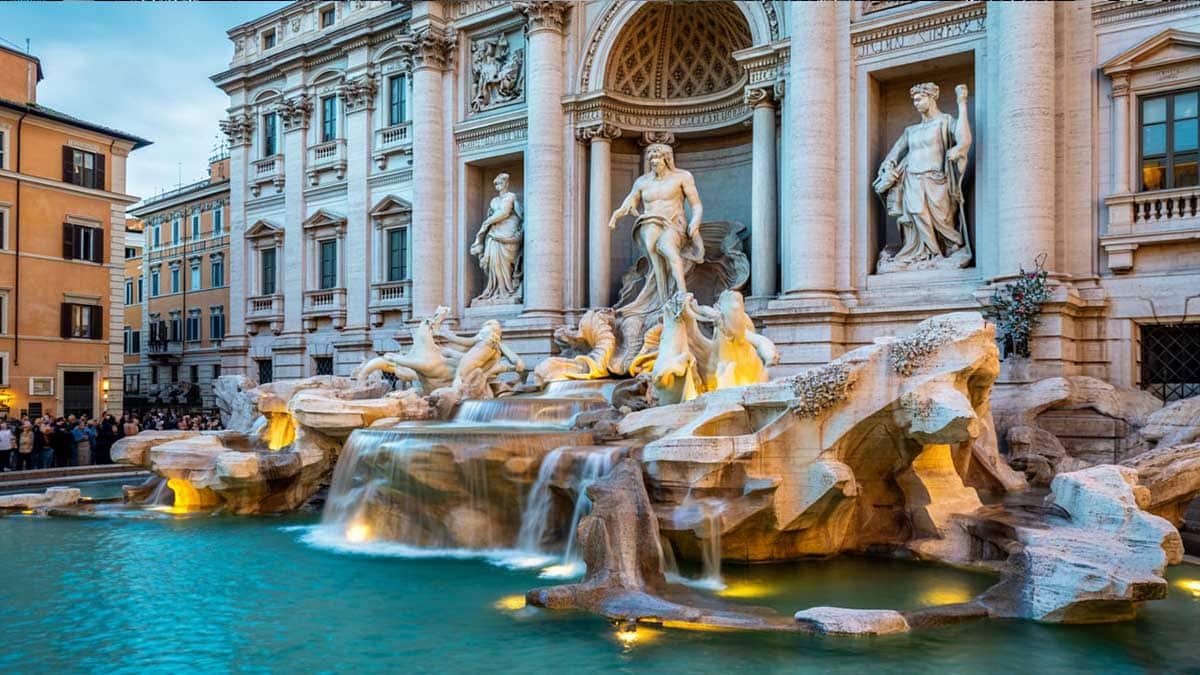
At almost any moment of the day, the Trevi Fountain feels alive. Cameras rise above the crowd, coins glint briefly in the air, and people wait patiently for a few seconds of space in front of the water. For years, this shared ritual has defined the experience: no ticket, no barrier, just patience and timing.
Bhutan: the country that quietly slows you down (and you’ll thank it for)
Europe in 2026: the trips worth planning around real dates
From February, that routine will shift slightly. Visitors who want to step into the area directly in front of the fountain will need to pay €2. The change does not block the view, nor does it turn the site into a closed attraction. It simply redefines how close is close enough, and invites travelers to rethink their approach to Rome’s most photographed places.
Why Rome chose to act now
The Trevi Fountain sits at the crossroads of beauty and pressure. The square is compact, the appeal universal, and the flow of visitors constant. City estimates suggest that around nine million people passed through the immediate area in a single year, with peak days reaching about 30,000 visitors.
At that scale, issues become very concrete. Movement slows to a crawl, pickpocketing becomes easier, and cleaning teams struggle to keep pace. Locals often avoid the area entirely, especially during busy hours. Rather than fencing off the site or introducing rigid time slots, Rome opted for a lighter form of regulation.
What travelers should understand
This decision is not about restricting culture. It is about easing pressure on a public space never designed for such density, day after day.
How the entry fee works in practice
The system is intentionally simple. There are no complex categories or fluctuating prices, just a clear rule applied at the busiest point.
| Visitor | Cost |
| Tourists | €2 |
| Residents of Rome | Free |
| Other regulated sites | €5 |
Residents remain exempt, reinforcing the idea that the measure targets visitor flow rather than daily life. City officials estimate that the Trevi Fountain alone could generate around €6.5 million per year, funds intended for maintenance, security, and public services in the historic center.
Rome is not acting in isolation. The Pantheon introduced paid entry in 2023, and Venice now charges visitors during peak periods. Across Italy, access rules are becoming more precise wherever popularity has outpaced infrastructure.
A fountain that is more than a photo
It is easy to forget, amid the crowds, that the Trevi Fountain is still part of a working water system. It marks the endpoint of the Aqua Virgo, an ancient Roman aqueduct inaugurated in 19 BC that continues to supply water today. Few landmarks combine daily utility and historical continuity so seamlessly.
There is also the tradition. Tossing a coin over one’s shoulder is not just a gesture for luck. Each year, the collected coins are donated to Caritas, supporting people in need across Italy. What looks like a tourist habit is also a quiet form of solidarity, woven into the life of the city.
Visiting the Trevi Fountain without the stress
For travelers, the new rules mainly require a small shift in perspective. The experience remains flexible, especially with a bit of planning.
• Visit early in the morning or late in the evening for the calmest moments.
• Decide whether standing right at the edge truly matters to you.
• Keep personal belongings secure during busy periods.
• Pair the fountain with nearby streets to step away from the flow.
Reynisfjara right now: what changed on Iceland’s black sand beach
Europe’s 2026 travel shortlist: Madeira, Tbilisi, Milan, Glasgow
Rome still rewards those who wander. Just a few streets away from the fountain, the noise fades and the city’s slower rhythm returns. That contrast is part of what makes the visit memorable.
The €2 fee at the Trevi Fountain acts less as a barrier than as a signal of adjustment. Rome is responding to constant attention with moderation rather than restriction. For most visitors, the change will amount to a brief pause before stepping closer.What remains unchanged is the place itself: the sound of water, the worn stone, the moment shared with strangers. Whether viewed from a few steps back or right at the edge, the Trevi Fountain still belongs to the city, and to those willing to meet it on its own terms.