Show summary Hide summary
- Launch: April 2026, operating April to September.
- Format: 5 days, 54 km, small groups, reservation-only.
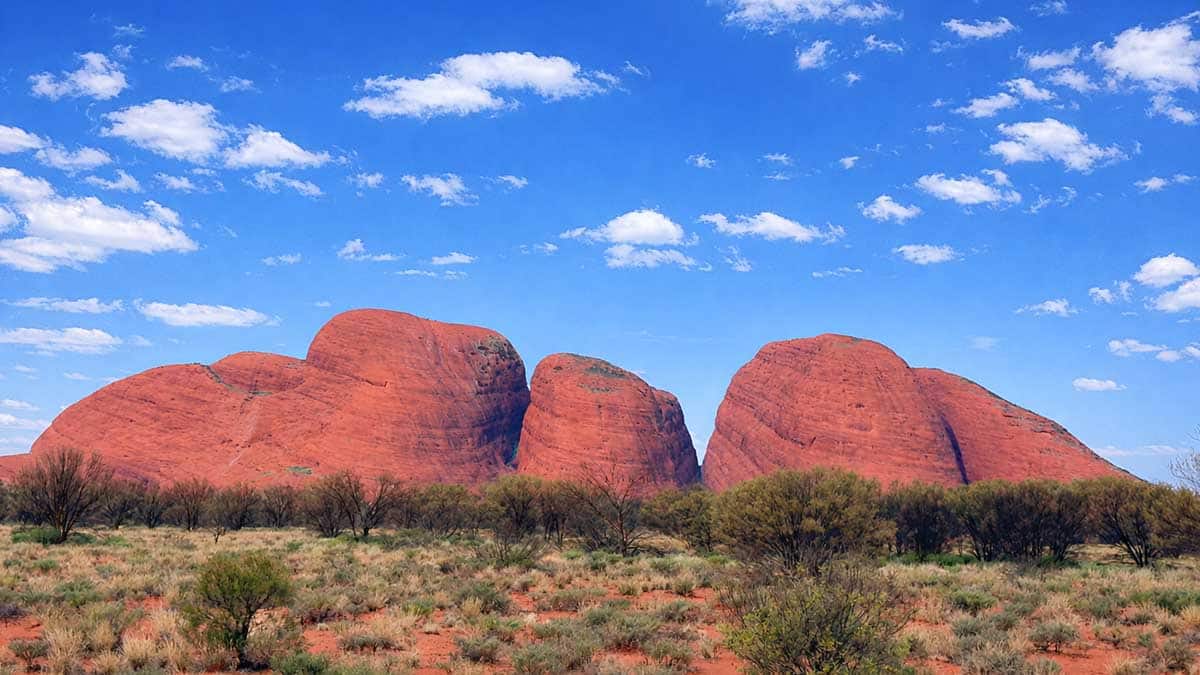
- Route: Kata Tjuta to Uluru on foot.
- Guiding: Anangu guides only, with cultural context and storytelling.
- Nights: eco-camps inside the park, designed for low impact (including solar power).
- Price: from AUD 5,395 (about EUR 3,075, depending on rates).
Uluru has that rare “bucket-list gravity”, but the way many people visit it can feel oddly quick. You arrive for the light show, you do one walk, you buy a drink, then you leave with the sense that you saw a symbol more than a place. It’s stunning, yet sometimes a little too fast.
Starting April 2026, the Uluru-Kata Tjuta Signature Walk aims to fix that with a simple idea: slow travel, on foot, in a small group, with the right people leading the way. Over five days and 54 km, you walk from Kata Tjuta to Uluru, sleep in eco-camps inside the national park, and hear the landscape explained by Anangu guides, not generic commentary.
Bhutan: the country that quietly slows you down (and you’ll thank it for)
Europe in 2026: the trips worth planning around real dates
A five-day walk, not a “day trip with extra steps”
This is not a trip you freestyle. It’s a guided-only itinerary with a fixed route, limited numbers, and a clear starting point: Kata Tjuta, then onward to Uluru. The design is meant for people who want the physical experience of walking, without spending their energy on constant planning. Small-group travel and reservation-only access set the tone right away.
The price does too. At AUD 5,395 and up, you’re not buying a casual add-on. You’re buying a full experience where the walking is the backbone, and everything around it is built to keep you focused on the place, not on logistics. Five days is also a commitment: it reshapes your itinerary in Australia, in a good way if you’re craving depth.
What the days feel like, and why the nights matter
A multi-day walk in the desert is less about chasing highlights and more about letting the landscape unfold. The difference is subtle at first, then obvious. You stop thinking in “stops” and start thinking in pace: light, heat, wind, distance. Walking changes scale, and time starts to stretch.
The Signature Walk is described as pairing long days on foot with comfortable nights in camp. The camps are presented as eco-camps inside the park, designed for low-impact living, including solar power. Evenings include meals under the stars, night-sky viewing, and “wellness moments” focused on recovery. It reads like a trip built around a simple loop: walk hard, eat well, sleep deeply, repeat.
Anangu guides are the point, not the decoration
Uluru-Kata Tjuta is not only scenic, it’s culturally significant. On this walk, guiding is not a generic service layer. It’s explicitly Anangu-led, which changes what the trip is trying to do. Instead of a list of facts, the experience centres on storytelling and cultural context shared by the Traditional Owners of this Country.
For travellers, that tends to shift behaviour in a very practical way. You learn what to look at, what to listen for, and what to treat with care. Meaning replaces trivia, and respect replaces routine. If you’ve ever left an iconic site thinking “I still don’t really get it”, this is the type of format that can answer that feeling.
Dates, season, cost, and who it actually suits
The operating window is April to September, which lines up with the more walkable months in the Red Centre. It doesn’t make the desert “easy”, but it makes long days outside more realistic. Season matters, and planning matters here.
The entry price, again, is AUD 5,395. That places it firmly in premium territory, and it will naturally filter the audience. Some people will prefer the classic Uluru visit: shorter, cheaper, more flexible. Others will see value in five days of structured walking, limited group size, and Anangu-led context. Neither is “better”, but they are very different trips.
Quick planning table
| Item | Confirmed detail | What it means |
| Launch | April 2026 | Plan ahead, demand may be high |
| Duration | 5 days | This becomes a core trip |
| Distance | 54 km | Moderate, but conditions add effort |
| Season | April to September | Better months for walking |
| Group size | Small groups | More intimate, less flexible |
| Guiding | Anangu guides only | Cultural context is central |
| Price | From AUD 5,395 | Budget like it’s your main experience |
A simple way to decide if it’s worth it
Reynisfjara right now: what changed on Iceland’s black sand beach
Europe’s 2026 travel shortlist: Madeira, Tbilisi, Milan, Glasgow
If Uluru is on your list because you want a powerful photo, you don’t need five days. But if you want something calmer, slower, and more grounded, this format makes sense. The walk is built around time inside the park, and around guidance that isn’t interchangeable.
It’s also a choice about travel style. Five days on foot is a commitment, and the cost is real. But if what you want is to come away feeling you didn’t just “see Uluru” but actually spent time with the place, this looks like a strong option for 2026. Slower travel can be the whole point.