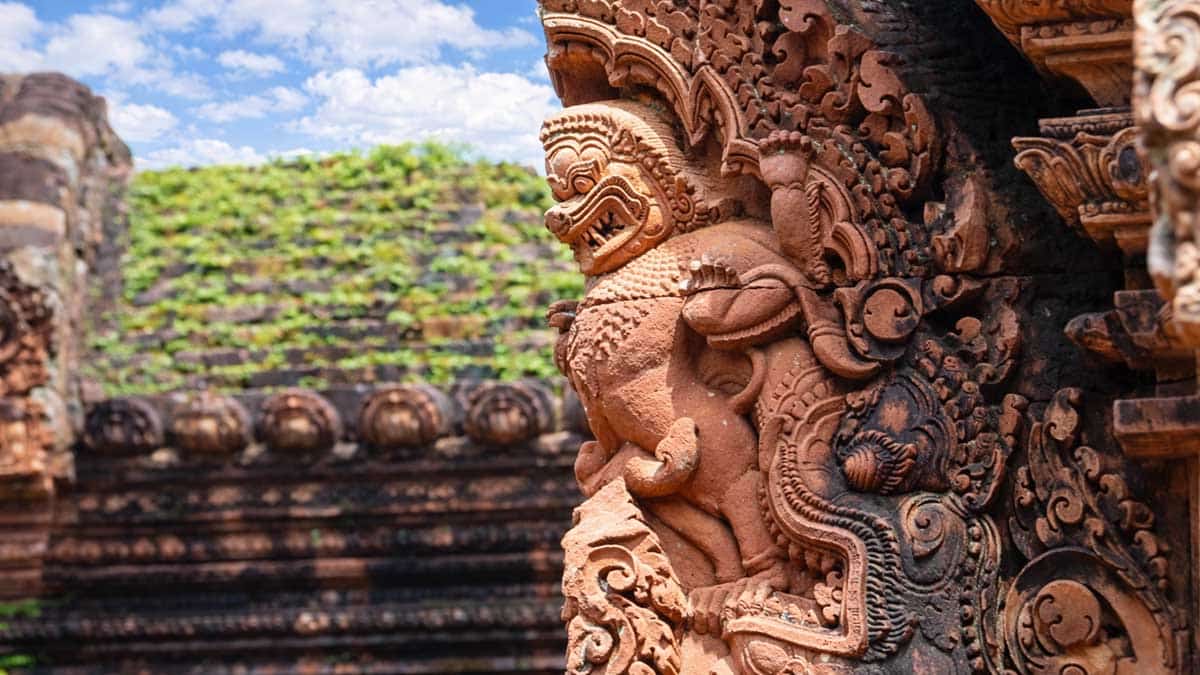
Show summary Hide summary
Summary:
- How many days you should realistically plan for a first visit.
- The easiest ways to move around Angkor without burning out.
- What the Small and Grand Circuits feel like, and why both matter.
- When a guide truly helps, and when you can go on your own.
- Small on-site details that quietly make the day much smoother.
Angkor lies just outside Siem Reap in northwestern Cambodia. What remains today is not a single monument, but the traces of a vast ancient city, shaped over several centuries by the Khmer Empire. Temples, gates, reservoirs, and stone roads stretch across a wide area, which still defines how visitors move and experience the site.
Most first-time visitors arrive with Angkor Wat in mind, but little sense of how the day really unfolds once the sun is up. Long distances, strong heat, early starts, and crowds can blur the visit faster than expected. This article keeps things simple and practical, so you can pace yourself, make better decisions on the ground, and leave Angkor with a clear memory of what you saw, not just what you photographed.
Bhutan: the country that quietly slows you down (and you’ll thank it for)
Europe in 2026: the trips worth planning around real dates
Visiting Angkor for the first time: how to approach it without rushing
Angkor is one of those places people imagine for years before arriving. Once there, many travelers realise they underestimated the scale of the site and the effort required to move through it. Seeing Angkor is straightforward. Enjoying it requires a calmer rhythm and a bit of planning.
This guide does not aim to list every temple or overload you with dates. It focuses on practical decisions that shape the visit, helping you keep energy, attention, and perspective throughout your time at Angkor.
How much time should you really set aside for Angkor?
Angkor does not reward speed. Compressing everything into one day often turns the visit into a race between temples, heat, and fatigue. Giving yourself margin allows you to walk slowly, rest in the shade, and stay focused.
Ticket options, realistically
| Pass | Who it suits | What it feels like |
| 1 day | Very tight itineraries | Intense and tiring |
| 3 days | Most first-time visitors | Balanced and flexible |
| 7 days | Slow travelers | Deep and unhurried |
The three-day pass is often the most comfortable option. Days do not need to be consecutive. One day at Angkor, one day to rest or explore Siem Reap, then back again with fresh attention.
Moving through Angkor without draining your energy
Angkor looks compact on a map, but on the ground distances add up quickly. Heat and humidity can turn short walks into real effort.
The main ways people get around
- Tuk-tuk
The easiest option for a first visit. Drivers know the circuits, adjust the pace, and wait at each stop. Prices usually range from 15 to 25 dollars per day. - Scooter
Flexible, but demanding. Best for travelers already comfortable riding in Southeast Asia. - Bicycle
Quiet and inexpensive, but physically demanding due to heat and long distances.
For most first-time visitors, tuk-tuks offer the best balance between comfort and efficiency.
Two circuits, two very different experiences
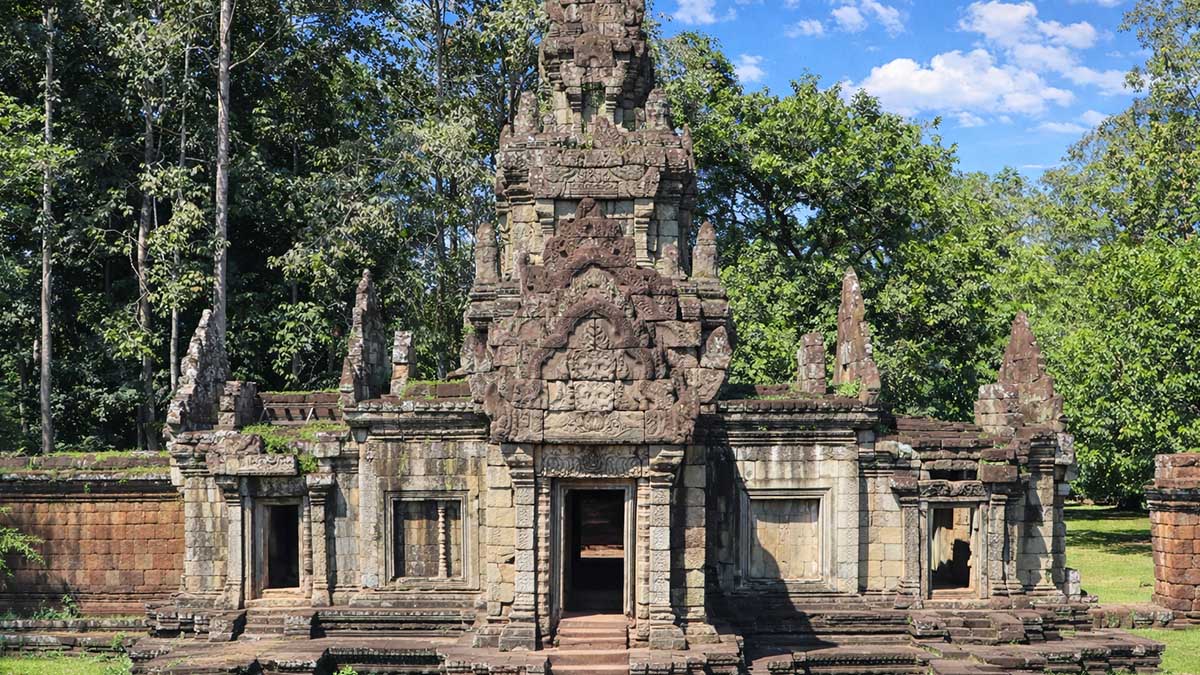
Angkor is commonly explored through two main routes. Each has a distinct rhythm and purpose.
The Small Circuit: first contact
This route includes Angkor Wat, Angkor Thom, the Bayon, and Ta Prohm. It is where most visitors begin, and where crowds are densest. The scale is striking, and the symbolism is everywhere.
As a first day, it helps you understand the structure of Angkor and why it feels like a former capital rather than a single landmark.
The Grand Circuit: space and distance
The Grand Circuit reaches temples such as Preah Khan, Neak Pean, East Mebon, and Pre Rup. Distances are longer, but the atmosphere is calmer. The pace naturally slows.
Many travelers remember this circuit more clearly because there is room to pause and walk without pressure.
With or without a guide: what changes?
Angkor can be visited independently without difficulty. The real difference lies in understanding what you see.
Visiting independently
- More freedom to move
- Lower cost
- Less context for carvings and layouts
Visiting with a licensed guide
- Clear explanations of stories and symbolism
- Cultural and religious context
- Easier navigation in complex temples
Guides usually charge between 30 and 50 dollars per day per group. Many visitors choose to hire a guide for the first day only, then continue on their own.
Small details that make a real difference
Angkor is not difficult, but it is demanding. A few practical choices quietly improve the entire visit.
- Cover shoulders and knees, as the site remains an active religious space.
- Carry more water than you think you need.
- Late morning and early afternoon are often less crowded than sunrise.
- Wear proper shoes, as uneven stones and steep stairs are common.
- Respect the site, with no touching carvings, climbing, or drones.
These details seem minor early in the day. By mid-afternoon, they matter.
Reynisfjara right now: what changed on Iceland’s black sand beach
Europe’s 2026 travel shortlist: Madeira, Tbilisi, Milan, Glasgow
Angkor is not something you complete or tick off. It is a place you move through slowly, with varying levels of energy and focus. Seeing less often means understanding more.
If you leave Angkor tired but calm, with a few moments still clearly anchored in memory, you likely approached it the right way.