Show summary Hide summary
Summary:
- Why trains, roads, and airports fill up fast at the same time
- How to choose between high speed rail and cheaper options without regret
- What to pack for long waits and crowded stations
- Timing moves that save energy, money, and nerves
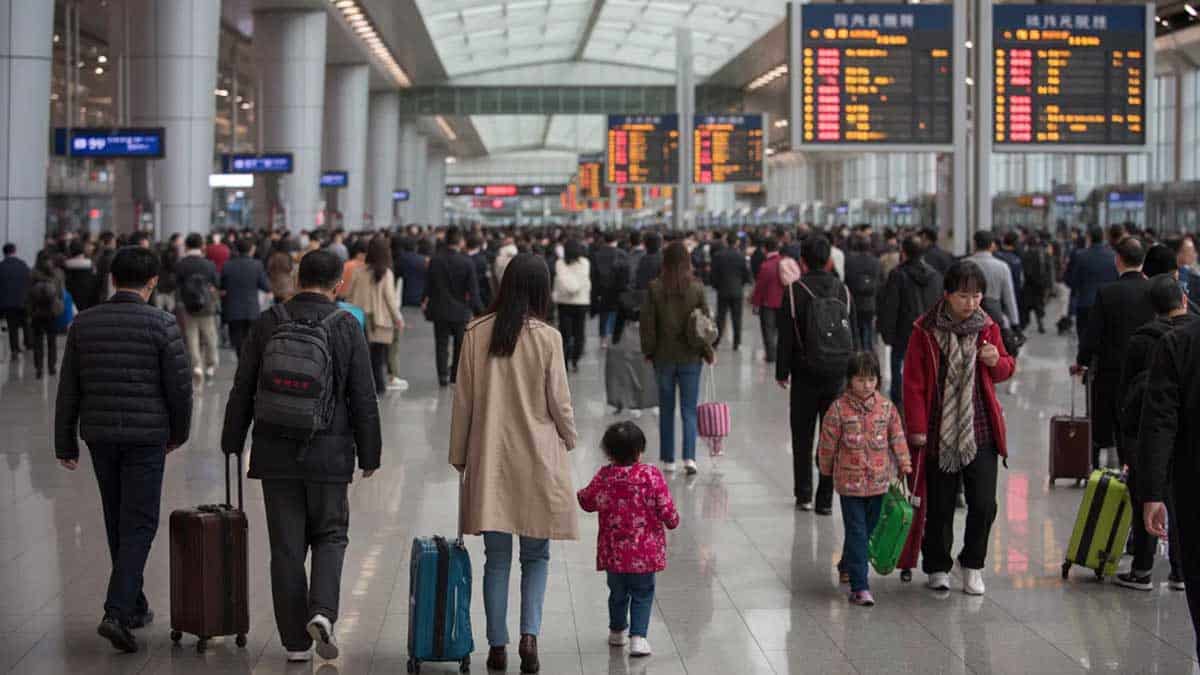
Picture a station on a cold evening: giant bags, kids snacking on the floor, and people scanning screens as if their next connection were a lottery ticket. That’s chunyun at ground level. Many people work far from their home province and use this window to see family, so the crowd is not a surprise, it’s the point.
The good news is you are not powerless. You cannot control the volume, but you can control your choices: your route, your departure day, your connection buffer, and what you keep within reach. This article sticks to real world tactics that help when tickets vanish quickly and everything moves a little slower.
Solo female travel: a simple guide to feel safe, social, and fully yourself
Lascaux IV in 2026: the 10th anniversary dates worth planning around
Chunyun, explained like you’re actually traveling
Chunyun lasts about 40 days around Lunar New Year. It is not just “busy,” it is a nationwide migration that pushes every weak link at once. Official projections mention 9.5 billion trips, with most travel happening by road, plus around 540 million rail journeys and 95 million air trips.
So why does it clog everywhere, all at once? Many workers and students concentrate their yearly homecoming into the same narrow window. Add long distances, limited “perfect” days, and the result is predictable pressure. The key idea is simple: during chunyun, the challenge is not traveling, it’s traveling without losing days to friction.
Time versus money, the decision that shapes your whole trip
During chunyun, most people end up choosing between speed and cost. A clear example is the Beijing to Chengdu trip. Some travelers take a conventional train that can run over 30 hours to save money, while high speed rail can cut it to around 9 hours, but often costs much more.
That trade off is more than comfort. It affects your sleep, your ability to handle delays, and even how you feel when you arrive. Ask yourself what you can afford to lose: cash, or energy. If you pick the slower option, plan for it like a long haul, not like a normal commute.
Quick comparison table: choosing transport during chunyun
| Option | Best when you want | Common downside in chunyun | What helps most |
| High speed rail | Speed and lower fatigue | Higher price, sells out fast | Shift your day by 24 to 48 hours |
| Conventional train | Lower cost, more seat types | Very long duration, crowded cars | Food, layers, earplugs, power bank |
| Long distance bus | Secondary routes, last resort | Traffic jams, variable comfort | Avoid peak departure days |
| Flight | Cross country speed if fare is decent | Price spikes, airport congestion | Pack light, arrive early |
| Car or rideshare | Door to door flexibility | Highway gridlock, packed rest stops | Leave at dawn, plan breaks |
Crowded stations, calm head: the packing list that earns its keep
Major stations during chunyun can feel slow and dense. Lines take longer, movement is tight, and your bag becomes part of the problem if it is hard to manage. In this context, “comfort” is not luxury, it’s a way to protect your patience and your focus.
Here is what actually helps:
- A power bank with an accessible cable
- Layered clothing for platform cold and carriage heat
- Water and simple snacks you can eat quickly
- Wipes, tissues, and hand sanitizer
- Earplugs if you need sleep
- Offline entertainment already downloaded
You will often see travelers with instant noodles because hot water is available in many stations. It is basic, but it works when you are stuck waiting. Keep a small “reach pouch” for documents, phone, battery, and a snack, so you are not digging through your bag in the crowd.
Tickets and timing: small moves that save hours
You can have a good ticket and still lose a day if you travel on the most saturated date. During chunyun, the biggest wins usually come from boring decisions, not clever tricks. A little flexibility is the closest thing to a superpower.
What works in practice:
- Leave one or two days earlier or later than your ideal
- Split an extreme journey into two legs with one overnight stop
- Avoid tight connections, because small delays can snowball
- Plan the last mile, reaching a big city is easy, reaching a small town can be the hard part
Guimarães 2026: Portugal’s Green Capital you’ll actually enjoy
Greece, Croatia, Albania: three neighbors, three very different travel moods for 2026
For many people, this holiday is one of the few chances to be home, which is why they accept discomfort. If you respect that reality and plan for congestion, you can still travel smoothly and arrive with enough energy to enjoy the time that actually matters.
Chunyun is not a battle you “win” against the crowd. It is a season you move through with a clear plan: choose the right trade off, pack for waiting, and build buffer time where things break down, at stations, on connections, and on the final stretch. Do that, and your trip stays manageable and worth it.