Show summary Hide summary
- A festival gets cancelled when a town hits its limit
- One perfect photo, one short season, one big bottleneck
- Want the Fuji plus blossoms moment? Do it without being “that tourist”
- Mount Fuji is tightening the rules, and it’s not random
- Bottom line: Fuji will still be there tomorrow, but locals have to live there today
Summary:
- Fujiyoshida City cancelled its Mount Fuji cherry blossom festival on February 3 after worsening congestion and disruption.
- The area around Arakurayama Sengen Park has become a hotspot for a single viral photo viewpoint.
- Officials cited traffic, littering, and intrusive behaviour in residential areas, including toilet-related incidents.
- The town plans crowd management measures anyway, with security staff and portable toilets, and encourages public transport.
- Visiting smarter is possible: go early, avoid weekends, stay in public areas, and carry out your trash.
- The cancellation fits a broader trend of stronger controls around Mount Fuji (fees, caps, and physical crowd deterrents in nearby towns).
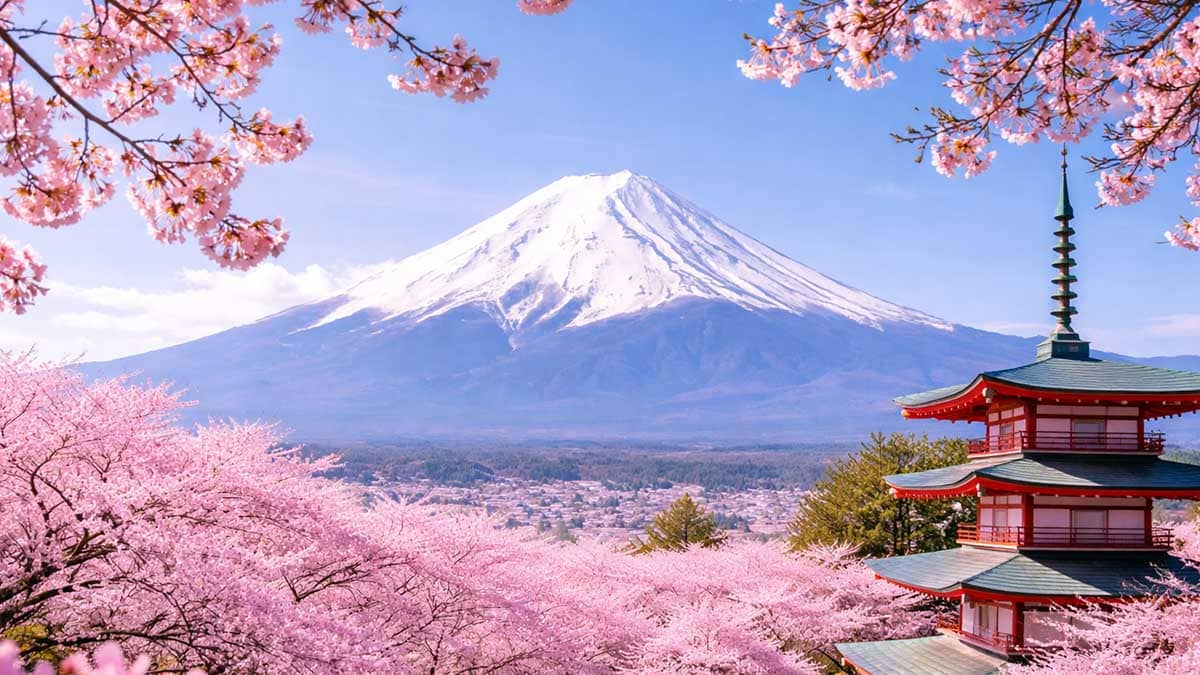
Mount Fuji framed by cherry blossoms is one of Japan’s most recognisable spring images. You’ve probably seen it a hundred times, the pagoda, the pink trees, the cone in the background, and a tight crowd below.
But in Fujiyoshida, the town behind one of the most famous viewpoints, the atmosphere has changed. The city cancelled its annual festival because the pressure on streets and residents had become too heavy, and the behaviour of a minority of visitors crossed lines that locals cannot ignore.
Solo female travel: a simple guide to feel safe, social, and fully yourself
Lascaux IV in 2026: the 10th anniversary dates worth planning around
A festival gets cancelled when a town hits its limit
Fujiyoshida announced the cancellation on February 3, pointing to traffic jams and growing management issues around the festival area. The message was simple: the event had become too hard to run without disrupting daily life.
This was not a small gathering. The festival had been running for about a decade and could attract around 200,000 visitors in peak years. As the crowds grew, the impact spread beyond the park, and the surrounding streets took the hit.
What pushed the situation into crisis was what happened outside the official perimeter. Reports mentioned visitors entering private homes to use toilets, and in some cases defecating in private gardens. There were also safety concerns, with local accounts saying students were pushed off pavements as sidewalks filled up.
One perfect photo, one short season, one big bottleneck
This story is often framed as a behaviour problem. It is also a maths problem: too many people arriving at the same place, within the same narrow time window, for the same iconic frame.
The Arakurayama Sengen Park viewpoint sits at the centre of that demand. The draw is obvious: cherry blossoms, the Chureito Pagoda in the foreground, and Mount Fuji behind. For many visitors, it becomes a checklist moment rather than a place to slow down.
A few factors amplify the pressure: the short blossom season, the way social media concentrates visitors on one exact spot, and the reality that Fujiyoshida is a town with streets not designed for festival-scale surges. Add a currency context where Japan can feel more affordable for many travellers, and crowd volumes rise fast.
Want the Fuji plus blossoms moment? Do it without being “that tourist”
Even without the festival, cherry blossom season will bring large numbers. Fujiyoshida has said it will still deploy security staff and install portable toilets, and it is encouraging people to use public transport and stay out of residential areas.
The good news is you can still get the experience without making the day worse for everyone. It mostly comes down to timing, boundaries, and small habits that add up.
Here’s a practical approach that helps immediately: go on a weekday morning, avoid peak midday, keep your photos in public spaces, and carry your own rubbish if bins are full. If you arrive and the area is overwhelmed, choosing to walk away is not “missing out”, it is protecting the place you came to enjoy.
Quick timing guide
| Plan | What you get | What you avoid | Trade-off |
| Sunrise | Quiet streets and cleaner views | The longest queues later | Early start |
| Weekday morning | More room and calmer movement | Weekend gridlock | Less festival vibe |
| Late afternoon | Cooler temps and softer atmosphere | Midday crush | Fuji may be hazier |
| Public transport | Less traffic impact | Parking stress | Needs planning |
| Driving | Flexible schedule | Bottlenecks | Parking can be harsh |
Mount Fuji is tightening the rules, and it’s not random
The festival cancellation fits a bigger pattern: Mount Fuji is popular enough that local authorities now rely on concrete controls, not just polite reminders.
On the hiking side, there have been measures including a 4,000 yen entry fee in high season on at least one main route, and a daily cap of 4,000 hikers on the Yoshida Trail, the busiest path. The goal is to reduce crowd risks and environmental impact while keeping access possible.
Nearby, the response to photo crowding has also been very direct. In Fujikawaguchiko, officials installed a large black mesh barrier to block a view that had become a magnet for unsafe crossings, litter, and trespassing. It was later removed before a typhoon, and authorities said they did not reinstall it because the pressure had already eased.
The takeaway is clear: towns are not trying to end tourism. They are trying to keep streets safe, keep neighbourhoods liveable, and stop public spaces from being treated like private film sets.
Bottom line: Fuji will still be there tomorrow, but locals have to live there today
Guimarães 2026: Portugal’s Green Capital you’ll actually enjoy
Greece, Croatia, Albania: three neighbors, three very different travel moods for 2026
If you’re visiting Mount Fuji during cherry blossom season, travel like you want to be welcomed back. Choose smarter times, stay within public areas, use the facilities provided, and avoid turning residential streets into overflow zones.
You can still come home with a beautiful Fuji and sakura memory. The difference is that it will feel like a good day for you, and not a bad day for the people who live there.