Show summary Hide summary
Summary:
- Thimphu feels like a capital, yet it stays calm and compact, with a clear visual identity.
- The idea of Gross National Happiness shows up in real choices, not just slogans.
- Dzongs are working landmarks, still tied to both spiritual and civic life.
- Travel times can be long for short distances, so plan less, feel more.
- Tourism is structured, so prepare early and confirm rules before booking.
Arriving in Bhutan often feels like switching settings in your head. Paro’s valley landing can be intense, then everything settles quickly: clean air, quiet buildings, and a sense that the country is not trying to entertain you. It’s asking you to pay attention, without saying a word.
That’s why Bhutan works best when you stop treating it like a checklist. In this guide, you’ll get practical, human-level context on Thimphu, the role of dzongs, what “Gross National Happiness” looks like on the ground, and how to build an itinerary that stays realistic and enjoyable.
Europe in 2026: the trips worth planning around real dates
Reynisfjara right now: what changed on Iceland’s black sand beach
Thimphu: a capital that doesn’t need to shout
Thimphu has the essentials of a capital, cafés, shops, government offices, daily movement, but it rarely feels hectic. The city stays human-scale, and that alone changes how you walk through it. You can sense modern life here, just without the constant urgency.
What stands out is the coherence: many buildings follow national style rules, so the city keeps a recognizable look as it grows. You’ll still see smartphones everywhere and younger locals moving fast in their own way, but the overall vibe remains measured and steady.
If you want a small moment that explains the place, visit a chorten early in the morning. People circle quietly, pause, murmur prayers, then continue with their day. It’s simple, almost ordinary, yet it reveals how spiritual life fits into everyday routine.
Gross National Happiness: less a slogan, more a compass
You’ll hear “Gross National Happiness” mentioned quickly when Bhutan comes up. On the ground, it feels less like a marketing phrase and more like a lens for decision-making. It suggests a simple question: progress, yes, but at what cost?
For travelers, the practical result is noticeable. Bhutan tends to protect cultural continuity and natural landscapes, and it manages tourism through a structured framework. That means your trip is often less spontaneous than in many countries, but also more orderly and guided.
It’s worth keeping the nuance: this philosophy doesn’t erase problems or debates. Bhutan is not a perfect bubble. What you feel instead is a country trying to hold a line, and that effort shows up in the tone of places, the pace of change, and the way visitors are welcomed with clear boundaries.
Dzongs: living fortresses, not museum pieces
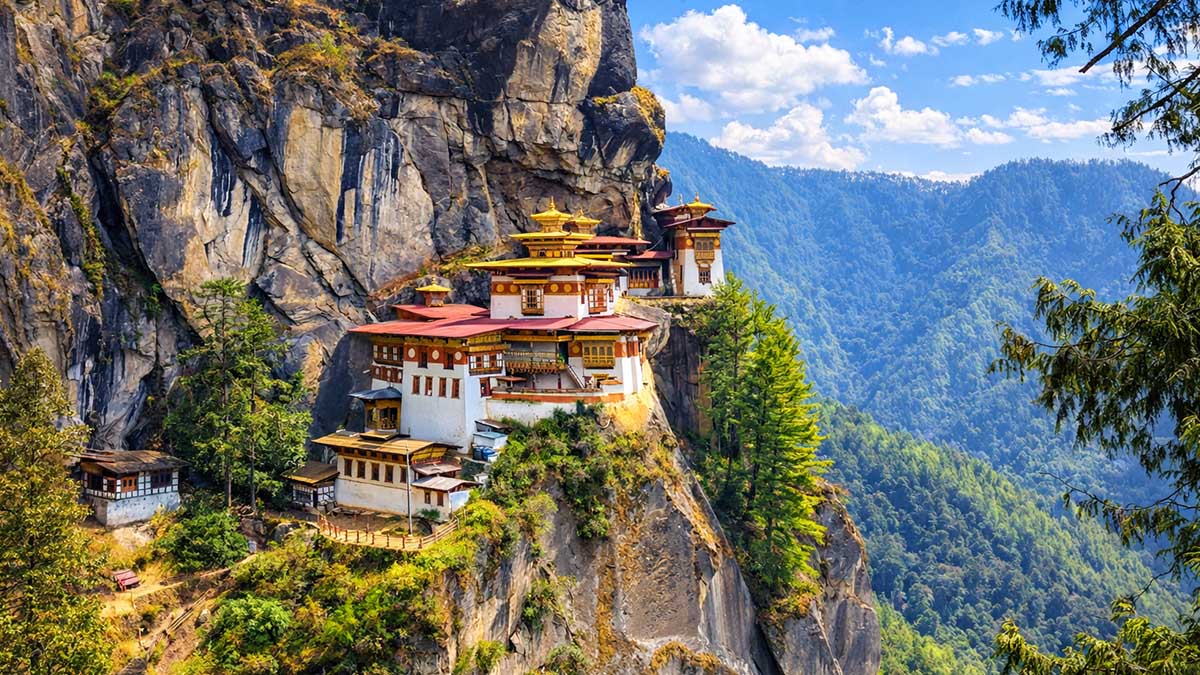
Dzongs are the architectural heart of Bhutan. These fortress-monasteries have deep historical roots, yet many are still used for religious and administrative functions. In other words, they’re not just “heritage sites”, they’re working spaces.
From the outside, a dzong often looks almost unreal: massive white walls, dark timber, and a strategic position above a river or at a valley choke point. Inside, the mood shifts. You move through courtyards and corridors, you see murals and symbols, and you might pass monks or officials going about their day. The atmosphere is quiet but active.
A helpful mindset is to treat a dzong like a place with rules, not a stage. Some areas will be open, others restricted. That’s normal. The point is not access to everything, it’s feeling how these buildings still shape daily life and connect people to history and faith.
The road is the lesson: planning for slow travel
Bhutan can fool you on a map. Distances look short, but travel times stretch out because of mountain roads, passes, and constant bends. The country runs on terrain time, not “Google Maps time”.
The easiest way to enjoy it is to plan lighter than you think you should. Build margins. Accept stops. A viewpoint you didn’t schedule can become the highlight of your day. If you keep chasing the itinerary, you’ll miss what Bhutan does best, which is giving you space to notice small, real moments.
Simple habits that make your trip smoother
- Leave breathing room between stops so the day stays comfortable.
- Expect altitude changes to affect energy, especially early on, and pace yourself.
- Treat scenic pauses as part of the plan, not as “lost time”.
- Choose fewer bases and explore locally instead of moving every night.
Fast reference table: common stops and what they give you
| Stop | The feel | Why it works |
| Paro Valley | Mountain arrival, crisp calm | A strong first impression and an easy reset into Bhutan’s pace |
| Thimphu | Quiet city life | A view of modern Bhutan without the usual capital pressure |
| Dochula Pass | Wide views, fresh air | A natural pause that makes distance feel worth it |
| Punakha | Softer valley, river landscapes | A striking contrast and a dzong setting many travelers remember |
| Trongsa | Central ridges and strategic geography | A place that helps you “read” the country’s mountain logic |
Before you book: what to confirm early
Bhutan’s tourism is structured, often involving an approved operator and arrangements that include a guide and driver. Requirements and fees can change, so it’s smart to verify current rules at the time you plan. That structure can feel limiting if you love full improvisation, but it also means many logistics are handled once you arrive, which can make the trip surprisingly smooth.
Europe’s 2026 travel shortlist: Madeira, Tbilisi, Milan, Glasgow
Too hot, too crowded: 3 cool European getaways that actually feel good
Pre-booking checklist
- Entry requirements for your exact travel dates, including any daily charges or permits.
- What’s included in the package, guide, driver, lodging, meals, and what’s not.
- Realistic travel times between stops, with buffer for breaks and weather.
- Your preferred pace, “see more” or feel more, then plan accordingly.
Bhutan stays with you because it asks less of your attention span and more of your presence. You may come for dzongs and mountain passes, but you often leave remembering quieter things: a courtyard hush, a morning walk, a bend in the road that opens a valley. If you let the country set the tempo, it gives back a kind of travel that feels clear and grounded.