Show summary Hide summary
- Oulu and Trenčín, two opening weekends that change the mood of a city
- Brussels in late 2026, a strong reason to stop “skimming” the city
- Helsinki and Tove Jansson, a long-running cultural stop you can schedule easily
- Valencia at the end of 2026, culture that pairs well with light and ease
- Eat your way through 2026, Crete, Gozo, and Kvarner
Summary:
- Oulu and Trenčín become European Capitals of Culture in 2026, with opening weekends in January and February.
- Brussels welcomes a major new art venue with the opening of KANAL-Centre Pompidou in late 2026.
- Helsinki spotlights Tove Jansson with a long-running gallery and exhibition at the Helsinki Art Museum (HAM).
- Valencia adds new cultural reasons to visit, with projects linked to Manolo Valdés and Joaquín Sorolla.
- For food-focused travel, Crete, Gozo, and Kvarner are highlighted as European Regions of Gastronomy for 2026.
If you have ever booked a European break and ended up following the same loop as everyone else, you know the feeling. The city is beautiful, the photos look great, and yet something is missing: a real moment to live, not just a list of places to tick.
That is why 2026 is a good year to plan around dates and openings. A well-timed trip feels different, because the streets are active, the local calendar is busy, and you get to ride a wave of shared excitement instead of moving through a museum-like city.
Bhutan: the country that quietly slows you down (and you’ll thank it for)
Reynisfjara right now: what changed on Iceland’s black sand beach
Oulu and Trenčín, two opening weekends that change the mood of a city
European Capitals of Culture are not just labels. For travelers, they can be the easiest shortcut to atmosphere, because a whole city invests in a year of concerts, public art, and community events, then kicks it off with a packed opening weekend.
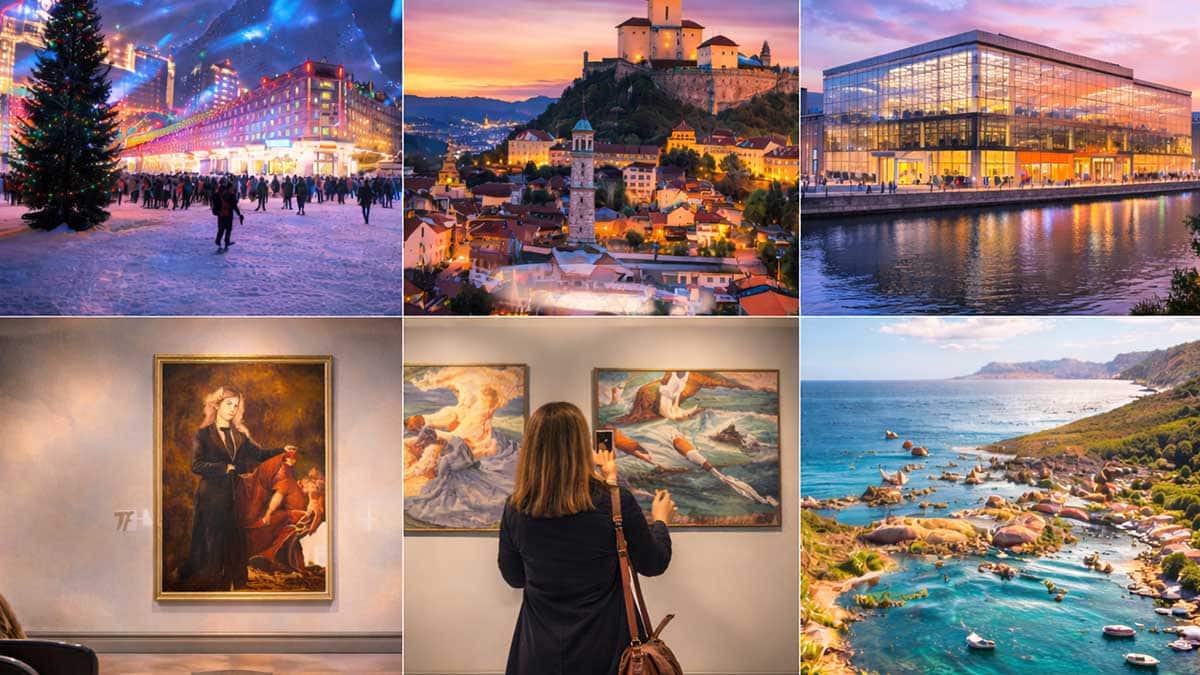
Oulu (Finland) launches its year with an opening festival scheduled for January 16 to 18, 2026, a midwinter burst of music and urban culture. Trenčín (Slovakia) follows with its own opening weekend from February 13 to 15, 2026, turning the historic center into a lively stage for performances and gatherings.
A simple way to choose your timing is to decide what you want more: intensity or comfort. Come during the opening weekend for maximum energy, or arrive a few weeks later for a calmer city that still keeps the cultural program running.
Brussels in late 2026, a strong reason to stop “skimming” the city
Brussels is often treated like a quick stop: one night, a few waffles, a short walk, then the next train. In 2026, it earns a proper weekend thanks to KANAL-Centre Pompidou, a major new arts venue set inside the former Citroën garage.
The opening is announced for November 28, 2026, and the concept goes beyond galleries. Expect large-scale exhibitions, performance formats, and places designed for staying a while, with social spaces built into the visit, not added as an afterthought.
If you plan to go near the opening, avoid squeezing it into a rushed itinerary. Book two nights, keep one half-day unscheduled, and let the city work its charm through neighborhood wandering rather than a strict checklist.
Helsinki and Tove Jansson, a long-running cultural stop you can schedule easily
Helsinki is at its best when you slow down. It is a city of design, cafés, shoreline walks, and small comforts that add up, especially in winter when the pace naturally softens.
In 2026, the Helsinki Art Museum (HAM) expands its focus on Tove Jansson, opening a dedicated gallery with a flagship exhibition starting February 13, 2026 and running into early 2027. The draw is not only the Moomin universe, but also Jansson’s wider artistic work, which feels more layered than many visitors expect.
This is the kind of trip you can build without stress. Pick a season you like, plan one museum visit per day, then balance it with a sauna evening and a simple dinner, so the city feels lived-in rather than consumed.
Valencia at the end of 2026, culture that pairs well with light and ease
Valencia already works as a sunny city break, but late 2026 adds cultural projects that can justify going specifically for art. One is Espai Manolo Valdés, a dedicated space linked to the Valencian sculptor. Another is a Sorolla-related museum display linked to Joaquín Sorolla and a large set of works associated with the Hispanic Society collection.
Because large projects can shift with construction and planning, treat Valencia as a city to watch closely. The smart move is to pick flexible dates and let the city’s strengths do the rest, with slow mornings, long lunches, and evenings that stay outdoors.
If you want a practical angle, Valencia is also a good base. You can split your time between the old town and the City of Arts and Sciences, then take short side trips when you feel like it, keeping the trip simple and breathable.
Eat your way through 2026, Crete, Gozo, and Kvarner
Food travel gets better when you stop chasing “famous dishes” and start following regions that take local products seriously. In 2026, Crete (Greece), Gozo (Malta), and Kvarner (Croatia) are highlighted as European Regions of Gastronomy, which makes them strong anchors for a trip built around markets, producers, and seasonal cooking.
Europe’s 2026 travel shortlist: Madeira, Tbilisi, Milan, Glasgow
Too hot, too crowded: 3 cool European getaways that actually feel good
Crete is about generous simplicity and ingredients that taste like the sun, often tied to the idea of the Cretan diet. Gozo offers a smaller, quieter island rhythm and everyday specialties that feel close to home cooking, including local cheese and traditional breads. Kvarner is a satisfying mix of sea and hinterland, where you can move from seafood to forest flavors and still keep the travel days short and easy.
If you are budgeting, the best trick is boring and effective. Stay just outside the hottest zones, then spend your money on one excellent meal or one food experience you will remember, instead of three average dinners.