Show summary Hide summary
Summary:
- The Registan is best visited twice, late afternoon and after dark.
- Gur-e-Amir reveals the city’s mix of beauty and power through Timur’s legacy.
- Shah-i-Zinda is the most intimate stop, full of detail and quiet emotion.
- A simple one-day route helps you avoid rushing and heat.
- Spring and autumn are the easiest seasons for walking and light.
Samarkand is not just a famous name on a map. It is a city that carries centuries of stories, built at a crossroads where merchants, scholars, and empires passed through. That Silk Road image is real, but it is not the full picture. Modern Samarkand is alive and practical, and the historic sites are part of daily life rather than sealed away.
What makes the visit memorable is not only the architecture. It is the mood. The way the Registan changes at night, the silence at Shah-i-Zinda, the weight you feel inside Gur-e-Amir. This guide keeps things simple and human, with a clear route, seasonal advice, and small tips that make the city feel less like a museum and more like a lived moment.
Bhutan: the country that quietly slows you down (and you’ll thank it for)
Europe in 2026: the trips worth planning around real dates
The Registan: the kind of square you don’t rush through
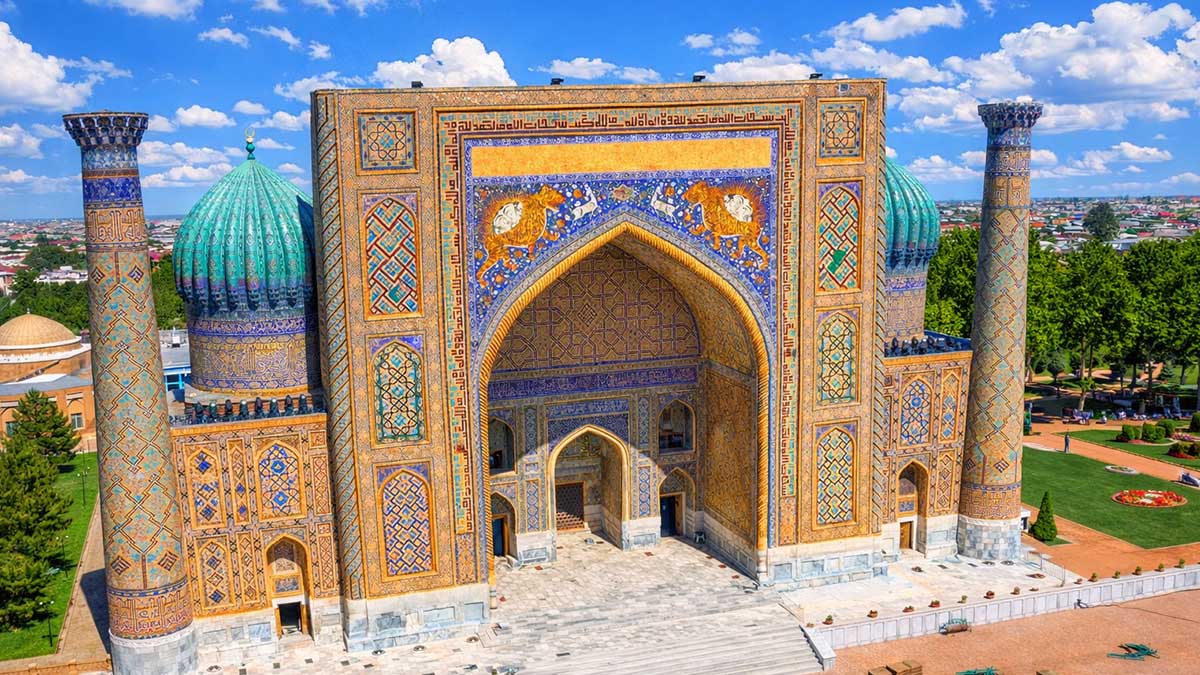
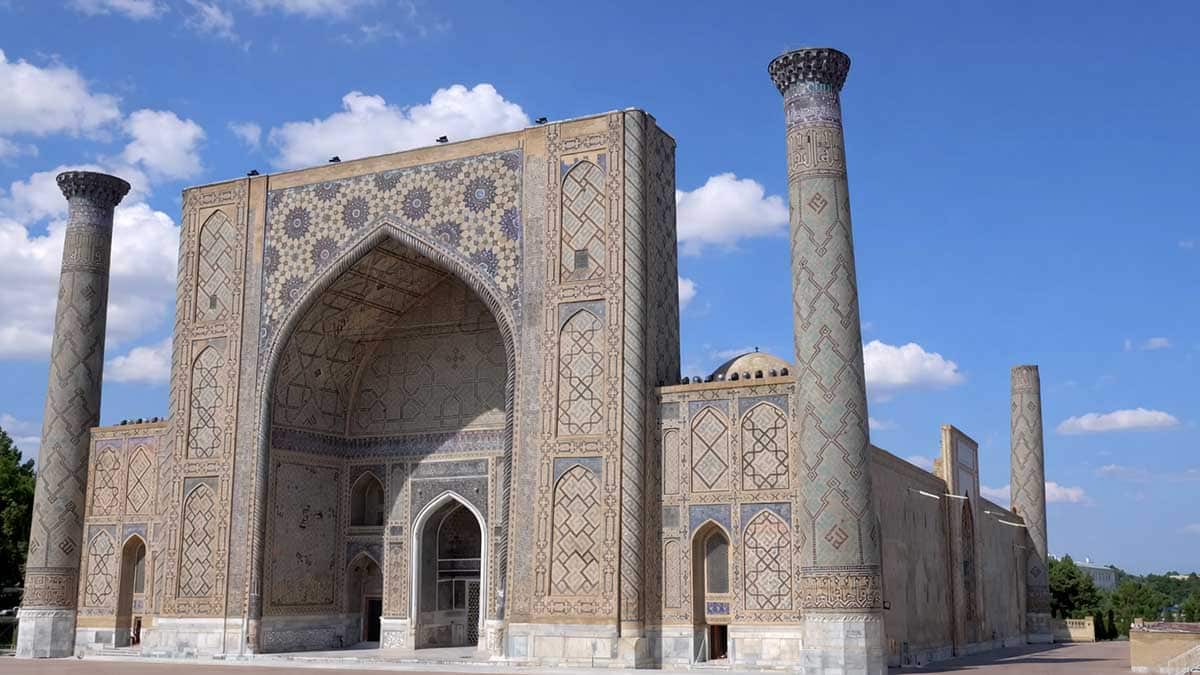
There is a moment most people have in Samarkand. You turn a corner, you see the Registan, and your brain takes a second to catch up. Three monumental madrasas face the square: Ulugh Beg, Sher-Dor, and Tilla-Kari. The scale is dramatic, but what really grabs you is the tilework, sharp geometry, deep blues, and tiny details that do not show up in photos. It feels less like a perfect monument and more like living craftsmanship.
The simplest way to enjoy the Registan is to see it twice. Late afternoon gives you warm light and soft shadows. After dark, the square becomes calmer and the buildings feel even larger. Instead of crossing it quickly, sit somewhere for ten minutes. Watch locals pass through as if it is ordinary, while travelers go quiet as if they have stepped into a sacred space. That contrast is part of what makes the Registan work.
If you can choose, avoid the midday rush. Early morning and late evening give you more space, better photos, and a much better sense of the atmosphere.
Gur-e-Amir: beauty, power, and a story that isn’t simple
Samarkand’s fame is tied to Amir Timur, known in the West as Tamerlane. He made Samarkand his capital and shaped it into a symbol of authority. The clearest place to feel that ambition is Gur-e-Amir, his mausoleum. From the outside, it looks clean and balanced. Inside, everything turns richer: gold tones, calligraphy, and patterns that pull your eyes upward. It is beautiful, but it also feels like a statement, almost like the building is saying, this is what power looks like.
It helps to keep the context in mind. Timur’s empire was built through conquest, and monuments like this were part of how power was shown. You do not need to turn the visit into a lecture, but knowing that layer makes the experience more honest. Samarkand is stunning, and it also carries a complicated past, which is exactly why it feels real.
Then the story shifts with Ulugh Beg, Timur’s grandson, remembered not as a conqueror but as a scholar and astronomer. That contrast is one of the city’s strongest themes: Samarkand holds both sides, the force and the intellect, the ambition and the art. It is never just one thing, and that is what gives it depth beyond the photos.
If you are short on time, Gur-e-Amir is one of the best single visits in the city. It gives you a strong sense of Samarkand’s tone in less than an hour.
Shah-i-Zinda: the blue corridor that feels personal
If the Registan is grand and open, Shah-i-Zinda feels close and quiet. It is a necropolis made of mausoleums aligned along a narrow path, each one covered in blues and turquoise that change with the sun. The place is not huge, but you will likely spend longer than you planned because the details pull you in. You slow down without noticing, which is often a sign you are somewhere special.
The atmosphere is different here. Even with visitors, people tend to lower their voices. It is one of the rare sites where Samarkand stops being impressive and becomes emotional in a simple way. Instead of big open space, you get a corridor of tilework and shadow, and it feels like you are walking through stories rather than monuments.
A few small habits make the visit smoother. Step aside often because the path is narrow. Look close at the mosaics because the beauty is in the detail. And if you can, go early. Shah-i-Zinda feels more peaceful and more powerful when it is not crowded, almost like a quiet passageway.
How to plan your visit without exhausting yourself
Samarkand is easy to include in an Uzbekistan itinerary, especially by train from Bukhara or Tashkent. The challenge is not logistics. The challenge is pacing. The city can trick you into rushing because the main sights are close enough that you feel like you should keep moving. But Samarkand hits harder when you slow down and let the atmosphere land.
Timing also matters because heat and crowds can change the experience completely.
Best seasons to visit
| Season | What it feels like | Good to know |
| Spring (Mar to May) | Mild, bright days | Best overall for walking and photos |
| Summer (Jun to Aug) | Very hot | Visit early and late, rest midday |
| Autumn (Sep to Nov) | Warm, steady light | Great balance and calmer pace |
| Winter (Dec to Feb) | Cold, quieter | Fewer crowds, shorter days |
A one-day route that actually works
If you only have one day, do not try to see everything. Focus on the stops that give you three different moods.
- Morning: Shah-i-Zinda (before crowds)
- Late morning: Gur-e-Amir
- Afternoon: Registan in golden light
- Evening: return to the Registan after dark
Reynisfjara right now: what changed on Iceland’s black sand beach
Europe’s 2026 travel shortlist: Madeira, Tbilisi, Milan, Glasgow
It is simple, but it gives you a full arc without feeling rushed. Most people who follow this rhythm leave with better memories and better energy, which matters more than squeezing in one extra monument.
Small tips that make a real difference
Carry cash for small payments and local vendors. Dress simply for religious sites, covered shoulders is a safe choice. In summer, plan your walking for morning and evening. And leave room for pauses, because some of the best moments are not on your itinerary. They are the moments where you stop and notice how the city feels.Samarkand is famous for its architecture, but that is not the whole reason it stays with you. The city has a mood that shifts from place to place. The Registan gives you the wow moment, Gur-e-Amir adds weight and context, and Shah-i-Zinda brings quiet emotion. If you give Samarkand the right light and a bit of time, it will feel less like a stop on a route and more like a memory you can replay.